Discover Different Types of Learning Styles With Online Test
Foundations: What Learning Preferences Mean and Why They Matter
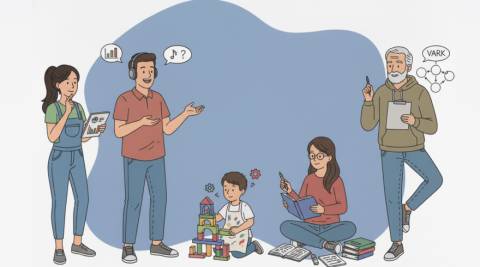
Across classrooms, learners absorb information through a lively blend of senses, prior knowledge, motivation, and context. Labels like visual, auditory, reading/writing, and kinesthetic can be helpful shorthand, but people rarely fit neatly into a single box. Instead, students toggle strategies depending on the task, the stakes, and the environment. Effective instruction acknowledges this fluidity, prioritizing multisensory input, clear structure, and authentic practice over rigid categorization.
Within this broad perspective, educators often refer to student learning styles to discuss patterns that appear during note-taking, problem-solving, collaboration, and reflection, anchoring lesson design decisions to observable behaviors. Well-chosen media, pacing, and scaffolds can widen access to complex ideas, while flexible demonstrations of understanding keep the focus on mastery rather than one-size-fits-all routines.
Practical decisions should be grounded in evidence, so teachers pair observation with measured reflection when assessing students learning styles in order to avoid overgeneralizing from a single assignment or mood, and to emphasize strategies that improve transfer and long-term retention.
- Blend modalities during explanations to reduce cognitive bottlenecks.
- Invite choice in practice tasks to activate autonomy and persistence.
- Model metacognition so learners can select techniques that fit the moment.
- Revisit concepts in new contexts to strengthen durable understanding.
Benefits of a Flexible, Research-Informed Approach
When instruction embraces variability, classroom climate changes: participation broadens, misconceptions surface earlier, and feedback becomes faster and more precise. Students gain a toolkit of strategies they can apply across subjects, while teachers see clearer evidence about what actually moves learning forward. This approach aligns with universal design for learning, which recommends multiple means of engagement, representation, and action/expression to reduce barriers before they arise.
Structured reflection tools can catalyze this growth, and a well-written learning style questionnaire for students encourages learners to notice how attention, memory, and motivation shift under different conditions, ultimately guiding them toward techniques that make studying more efficient without reinforcing fixed labels.
Teachers can also track patterns over time, and a thoughtfully built student learning styles inventory helps teams coordinate supports, document progress, and plan targeted interventions that honor individual differences while keeping expectations high.
- Clear routines and visual schedules stabilize attention during transitions.
- Choice boards and portfolios provide varied routes to show competence.
- Retrieval practice and spaced review turn short-term insight into durable knowledge.
- Feedback cycles grounded in exemplars sharpen self-assessment and revision.
Identifying Preferences and Matching Strategies Without Labels
Discovery works best when it is iterative: observe, hypothesize, test, and adjust. In practical terms, that means analyzing how a learner approaches a task, providing alternatives, and inviting reflection on which combination produced the clearest understanding. Over time, patterns emerge, some students benefit from manipulatives first, others from diagrams, still others from quick verbal summaries followed by written rehearsal. The goal is not to pigeonhole, but to expand the set of tactics that reliably produce success.
| Learner tendency observed | Instructional supports that help |
| Prefers step-by-step sequences | Numbered checklists, worked examples, and model-answer comparisons |
| Thinks in images or spatial maps | Infographics, sketchnotes, timelines, and concept mapping with connectors |
| Needs to “try it” to understand | Hands-on labs, simulations, role play, and rapid prototyping cycles |
| Processes through dialogue | Think-pair-share, debates, peer teaching, and structured academic talk |
Measured tools can complement observational notes, and a balanced learning styles assessment for students should prompt reflection about attention, strategy selection, and task demands, leading to actionable next steps rather than static labels.
Survey data can also guide resource allocation, and results from a learning styles survey students complete at the start of the term may inform which visuals, manipulatives, or sentence frames to prepare for upcoming units.
Short reflections can be equally informative, because a well-framed learning style survey for students invites narrative examples of past successes and barriers, illuminating the contexts in which particular techniques work best.
- Pair student reflections with teacher notes to triangulate insights.
- Revisit data after major projects to refine supports and reduce friction.
- Translate findings into concrete routines students can apply independently.
Practical Tools, Activities, and Classroom Routines
Implementation thrives on simplicity: a handful of reliable activities used consistently beats a sprawling menu used rarely. Rotations, mini-lessons, and practice stations help learners experience multiple representations quickly, while exit tickets capture which method landed best that day. Over weeks, learners stitch together a personalized study playbook they can deploy across subjects and grade levels.
Quick diagnostics can jump-start reflection, and a short learning style quiz for students works well as a conversation starter that points students toward tactics like dual coding, retrieval practice, or elaborative interrogation, followed by low-stakes experimentation.
Older learners benefit from nuance, so a targeted learning styles quiz for college students should spotlight time management, note systems, and transfer across disciplines, yielding concrete habits that fit busy schedules and complex coursework.
Younger teens need relevance and clarity, which is why a classroom-friendly learning styles quiz for high school students can connect study strategies to upcoming assessments, group projects, and portfolio milestones, turning insights into predictable routines.
- Station rotation: decode a concept through diagramming, a mini-lab, and a micro-lecture.
- Choice-driven practice: pick two of four tasks that build the same competency.
- Study sprints: alternate five minutes of retrieval with two minutes of reflection.
- Peer synthesis: teach a classmate using a different medium than the one you learned from.
FAQ: Clear Answers to Common Questions
Are learning styles “real,” or are they a myth?
Researchers agree that people have preferences, but achievement rises most when teachers use multiple representations and students practice with varied strategies. Preferences can inform initial choices, yet robust learning comes from aligning methods to the content and from practice that strengthens memory, transfer, and problem-solving.
How should teachers use preferences without reinforcing labels?
Focus on strategy menus tied to learning goals, not on fixed categories. In practice, a reflective tool like a learning styles quiz students can open a dialogue about what worked and why, steering learners toward methods that suit the task at hand and supporting flexible strategy use over time.
What is the best way to collect student insights at the start of a course?
Begin with short reflections and low-stakes tasks, looking for patterns in attention, persistence, and error types. You can combine these notes with exit tickets and quick checks to triangulate insights, adjusting supports before larger assessments arrive.
How do I help students translate insights into daily study habits?
Co-create a small set of routines such as spaced retrieval, dual coding, and self-explanation, then revisit them weekly. After a few cycles, students can build personal checklists, calendars, and exemplars that make strategy selection automatic during independent work.
What about formal self-report tools and surveys?
Use them to guide reflection, not to determine ability, and embed follow-up action steps. For instance, a concise student learning style questionnaire can prompt learners to test two different techniques on the same concept and record which one yielded clearer recall and fewer misconceptions.