Learning Style Test

Turn Study Time into Results

Understanding the Foundations of Personalized Learning

Personalized education is compelling because it aims to match instruction to real human differences. Across classrooms and boardrooms, the idea of learning styles surfaces whenever people discuss tailoring lessons. When used judiciously, this concept becomes a lens for choosing strategies that respect attention spans, prior knowledge, and motivation.
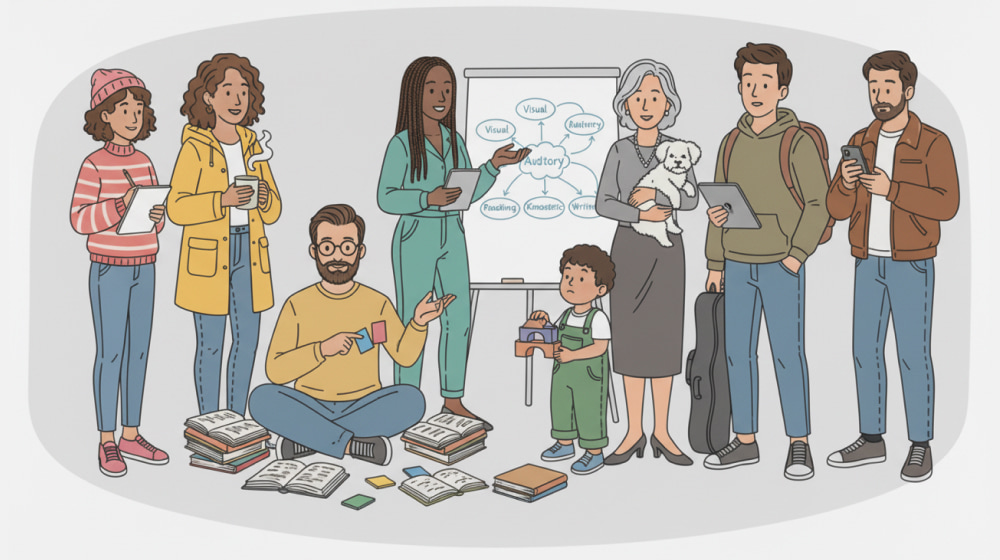
Researchers point out that cognition blends memory, attention, perception, language, and emotion. Within that mix, your learning preferences influence which explanations feel intuitive and which formats feel cumbersome. Rather than treating tendencies as fixed categories, effective educators treat them as clues that inform a flexible plan.

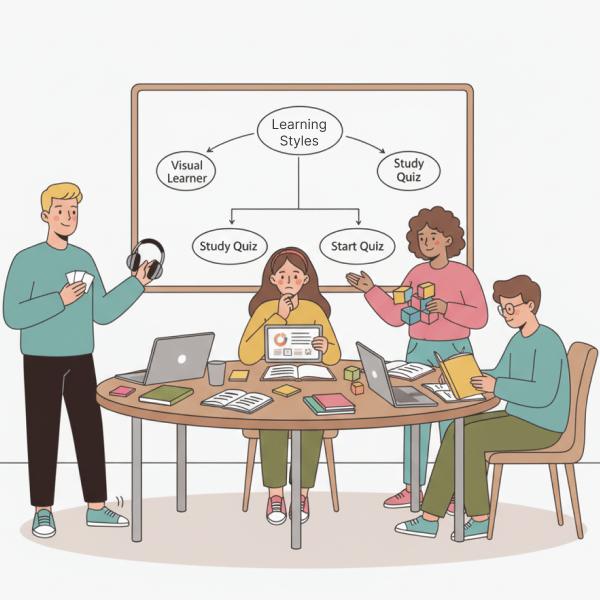
Present concepts through visuals, narratives, examples, and hands‑on demos to widen access.
Encourage metacognition so learners explain how they approached a task and why it worked.
Blend retrieval practice with elaboration, spacing, and interleaving to strengthen long‑term memory.

Models, Myths, and Practical Mapping

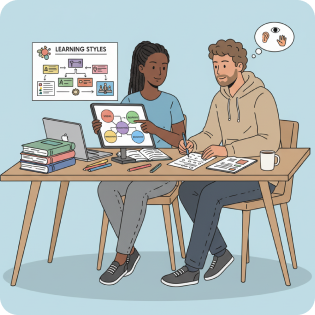
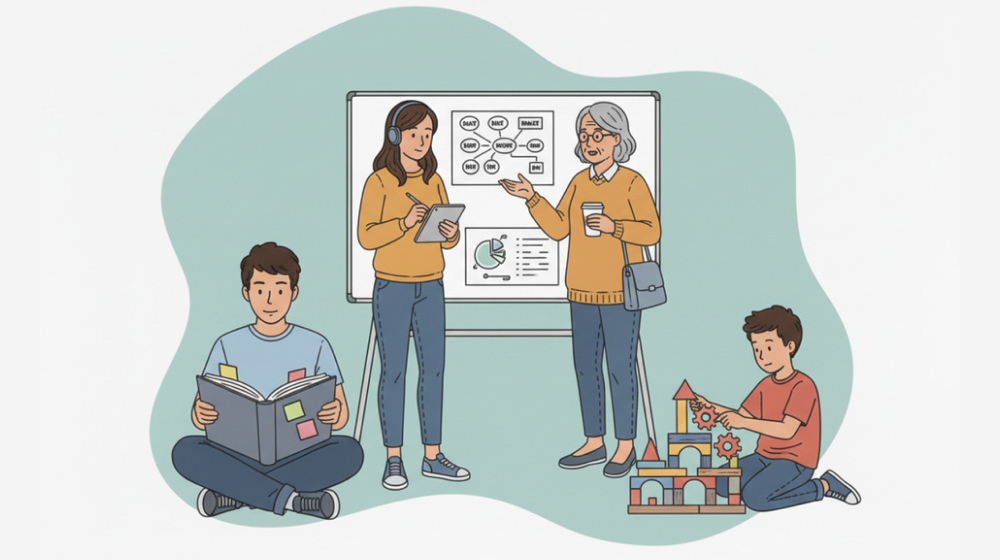
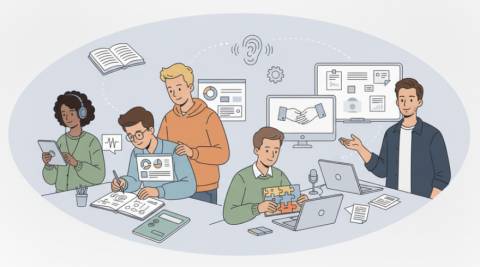
Several frameworks attempt to map common ways people process information. In practice, discussions often revolve around different types of learning styles such as visual, auditory, reading/writing, and kinesthetic. While each mode has a distinct flavor, most learners benefit from a rich mixture rather than a single channel.

Modality Typical Strengths Common Pitfalls Targeted Study Tactics
Visual Pattern spotting, spatial reasoning, diagram tracking Overreliance on static images; skim‑reading graphs Sketch concept maps, annotate charts, color‑code processes
Auditory Rhythm, dialogue, tone sensitivity, and verbal sequencing Passive listening; difficulty reviewing without audio Explain aloud, record summaries, join structured discussions
Reading/Writing Note‑making, synthesis, and precise terminology use Transcription instead of transformation; dense notes Convert ideas into outlines, glossaries, and teach‑back notes
Kinesthetic Embodied memory, procedure learning, tool familiarity Limited options for abstract topics; setup overhead Simulate processes, prototype quickly, and use manipulatives

One of the most cited maps uses four modal buckets. Educators frequently reference VARK learning styles when categorizing materials for quick alignment. The key is to treat these labels as starting points for design rather than immutable learner identities. Another influential idea suggests humans have distinct domains of ability. Some programs popularized the multiple intelligences test as a way to spark reflection on strengths. While intriguing, a rigorous approach still emphasizes practice quality, deliberate feedback, and transfer of knowledge across contexts.

People learn more effectively when content, practice, and feedback match task demands.
Choice and varied representation often increase motivation and attention.
Teaching with multiple modalities supports deeper encoding and retrieval.

Self‑reflection is the fastest route to smarter study habits. For a quick snapshot, many learners try a learning style test to generate hypotheses about productive tactics. Deeper diagnosis blends surveys, performance data, and journaling. In that broader approach, an educator might combine a brief learning style assessment with observed patterns from assignments and quizzes. Tracking tendencies over time can sharpen decisions about resource formats. In many classrooms, teachers still reference a learning style inventory to capture baseline tendencies before a unit begins.

Strategies for Learners of All Ages

Foundational techniques scale from elementary to graduate study when they are adapted to context. In schools, conversations about student learning styles often lead to more diverse materials and richer practice sets. The real payoff comes from pairing choice with explicit strategy instruction so learners can articulate why a method works. Short surveys and reflection prompts help people articulate tendencies without boxing them in. In many programs, a brief learning style questionnaire is paired with a reflective debrief to plan next steps. That debrief can assign roles in group work, balance modalities, and schedule spaced review.

Adults returning to study can benefit from quick diagnostics before launching a course. For a low‑friction check, many platforms provide a learning style quiz that yields a simple profile to guide resource selection. The next step is to validate the suggestions by measuring retention after delays, not just immediate comfort. Young learners thrive when discovery feels playful and structured. In youth programs, families sometimes try a learning style quiz for kids option to spark conversations about study routines. Paired with teacher observations, that insight can guide material choices without narrowing opportunities.

Rotate roles in group tasks so each learner practices multiple modalities.
Blend storytelling, diagrams, and mini‑labs to reach varied tendencies.
Use timers, checklists, and rubrics to make strategy use visible and coachable.

Track & Improve

During reflection, journaling about identifying your learning style can reveal patterns that weren’t obvious in the moment. Capture not just what you did, but also how you felt, what you recalled later, and which cues triggered understanding. Momentum grows when you design routines that match your goals and constraints. In practice journals, describe how you learn during challenging tasks, then compare that narrative against performance one week later. Use those findings to design a repeatable warm‑up, study block, and review cycle that fits your schedule.

Track & Improve

Focusing on Strategies That Truly Work

Questions are normal at the start of any improvement process. In coaching sessions, people frequently ask what is my learning style as if there’s a single definitive answer. A better question is, “Which strategies produce durable gains for this subject, at this moment, with my current constraints?”

Test one change at a time so you can attribute improvements correctly.
Schedule spaced reviews and interleave topics to strengthen retention.
Close the loop by examining errors and rewriting solutions in clearer steps.
Discover Different Types of Learning Styles With Online Test

FAQ: Common Questions About Learning Styles

Do some modalities always work better than others?
No single modality wins in every situation, because tasks place different cognitive demands on learners. Visual mapping may help with anatomy, while spoken rehearsal might boost pronunciation. The best results usually come from blending multiple representations aligned to the skill being practiced and the assessment you will face.
How should I use profiling tools without over‑labeling myself?
Treat any profile as a starting hypothesis rather than a fixed identity. Use quick experiments to validate whether a suggested tactic actually improves retention after a delay. Keep what works, drop what doesn’t, and revisit your plan each term as courses, goals, and constraints change.
What’s a practical way to measure progress when I change study tactics?
Adopt a simple learning journal that records session goals, activities, and a one‑week follow‑up check. Track recall accuracy, speed, and confidence, then compare across different formats. Small, consistent measurements reveal which methods transfer beyond immediate comfort into durable performance.
How can teachers apply this without adding hours of prep?
Build a reusable toolkit of templates: diagram frames, mini‑lectures, quick labs, and retrieval prompts. Rotate them across topics, and let students choose a format for at least one practice activity. Short reflection prompts will surface which materials helped most, guiding small adjustments rather than wholesale redesigns.
Is it possible to overdo personalization?
Yes, overfitting instruction to preferences can narrow exposure and reduce adaptability. Maintain common core experiences, then layer optional pathways for practice and enrichment. This preserves rigor and equity while still giving learners agency to select tactics that improve understanding and long‑term retention.

The Latest News

A Comprehensive Guide to the VARK Questionnaire and Its Benefits
Foundations of a Multimodal Preference Framework Every learner absorbs, processes, and retrieves information through a blend of sensory channels, and recognizing these tendencies can dramatically improve outcomes. Rather than boxing people into strict categories, a modern preference framework invit...
Mastering Exam Prep: A Practical Guide With Benefits That Compound
Mindset and Framework: Build a Study Plan That Actually Works Exams reward clarity more than sheer stamina, so treat your preparation like a miniature project: scoped, scheduled, and measured. With a defined outcome and resources, the question of how to study test shifts from panic to process. You...
VARK Assessment Explained: A Practical Guide to Understanding and Optimizing How You Learn
What Is the Vark Model and Why It Matters Most learners sense that some explanations click faster than others, yet the reason can feel mysterious. The VARK framework brings that pattern into focus by describing preferences for taking in information through Visual, Auditory, Read/Write, and Kinesthe...

Please Note

This website (learning-style-test.net) is not an official representative, creator or developer of this application, or product. All the copyrighted materials belong to their respective owners. All the content on this website is used for educational and informative purposes only.